

Celebrat The Small Wins

Photo by DESIGNECOLOGIST on Unsplash

Hi everyone, just like it’s important to break large goals into small ones, it’s important to celebrate when you achieve those small goals.

The reason is because the feeling of satisfaction we get from achieving any goal is similar, regardless of the size. By being intentional about celebrating the wins, we reinforce the behavior that got us there, which sets us up with the motivation to achieve the next thing. This is especially important when leading a team and they achieve wins or goals because the celebration doubles as recognition and let’s them know you value their achievement. Recognizing and celebrating the things that are important for the organization’s success separates the best leaders from the large pool of okay leaders and creates a culture of loyal, high performing team members.

This can be difficult for those of us who immediately move on after a goal is met and start working on the next one, but we’re leaving some gains on the table if we don’t bask in the glory, at least for a minute before getting after it again. A celebration within an organization is a great opportunity to recognize the contribution of the individual or the team in front of their peers and more importantly, the leaders who will be instrumental in developing that team member’s potential. It’s an opportunity for leaders to engage with team members they don’t typically work with and get to know them better, which benefits the whole organization.

Find a reason to celebrate this week!

I Wish Someone Had Told Me

Photo by James Lee on Unsplash

Hello everyone and Happy New Years 2024! I’ve spent a lot of time over the past few weeks reflecting on how I could help more people achieve their personal and professional goals, especially younger people who are standing where I once stood. That led me to to question what would have helped me when I was starting my own career and personal journey. I believe the one thing that would have done more than anything to help me is to have someone I respected build my confidence by helping me understand the opportunities that existed.

When I was in high school I believed that college was only for excellent athletes, academic prodigies, or people who were rich. Nothing could be farther from the truth, but that was my worldview because there weren’t many people in my circle who’s parents had gone to college. Now I know that higher education is accessible to everyone and with the right level of discipline and motivation, people of all levels of intelligence can successfully complete their education goals. College isn’t for everyone, but everyone should know that it’s accessible to anyone.

I also believed that markets were dominated by large corporations, so it would be impossible for someone to start a business and successfully compete against giants. Now I understand that as businesses grow, it becomes harder and harder to be nimble enough to keep up with rapidly evolving market changes. The world constantly wants something unique which places small entrepreneurs or creators at an advantage. Young people feel they’re at a disadvantage when joining organizations with a lot of long-tenured employees, but we need to let them know that those organizations are hungry for new ideas so they’re in a unique position to bring a lot of value immediately and be recognized.

How important it is to be humble, ask questions, be positive and build relationships. I believed managers and employees with more experience expected me to know what I was doing in order to have a seat on the team, so I did my best to maintain that view and struggle through without asking questions. I still see that behavior with young people entering the workforce today, which is probably due to pride and other complex human emotional behaviors, but it’s doing as much damage to their careers as it did to mine. Help new employees understand that they’ll be much more successful if they are honest about what they don’t know, aren’t afraid to ask questions, be positive despite challenges, and that relationships are critically important, even in organizations like government agencies where some people still believe policies negate the need for good relationships.

This year, help young people and new employees understand how the world really works. It’s a sign of strength which will be recognized and rewarded as those folks move through their journey.

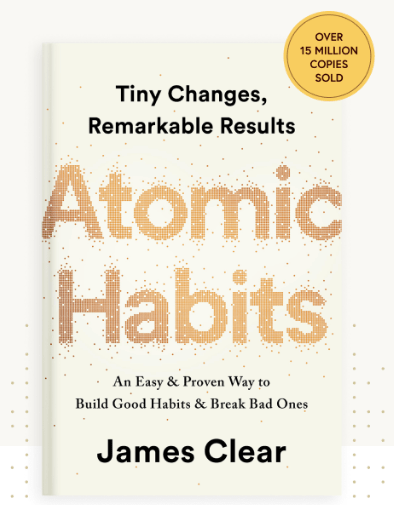
Book Review: Atomic Habits

Hi everyone, it’s been over a year since I last published a blog post, and for that I apologize. In that year, I’ve spent less time overall in front of a screen, and more time connecting with people and spending time outdoors. Recently I’ve missed this outlet to collect my thoughts so I’m rekindling this blog with a book review.

I just finished reading “Atomic Habits”, by James Clear and enjoyed it thoroughly. James’ strategy is very similar to mine, and he does a great job showing readers step-by-step how to create good habits that will help them live better lives. He has four laws to form a sustainable habit, and the book is an easy and engaging read that could easily be done in an afternoon. James throws in just enough stories and history to keep the material interesting and connect the strategies to the real world. I wished I had read his book twenty years ago as it would have made my journey easier; if for no other reason than to reinforce my own thoughts about the power of starting small.

The most powerful thing in the book for me is the “two-minute rule”. “When you start a new habit, it should take less than two minutes to do.” Here’s a few of my favorite lines. “A new habit should not feel like a challenge.” “The point is to master the habit of showing up.” The two-minute rule lines up perfectly with the methods I’ve used to improve myself so I know it works. I don’t want to spoil the book for you, but hopefully I’ve inspired you to read it for yourself. Use it to get 1% better today!

The Power of the Action Item List

Photo by Glenn Carstens-Peters on Unsplash

How many times have you had a seemingly simple goal or plan fail along the way because you lost sight of the little things that were critical to a successful outcome? It’s happened to me many times, and I’ve learned to use action item lists to combat these failures. It’s not for lack of good intention or work-ethic that we fail; we just overestimate our ability to focus and remember our plan in the days or weeks that follow the creation of it. We leave a meeting with clear direction believing it will be easy to remember everything we had to do, and then the inevitable happens…..our attention is drawn elsewhere, then we sleep, and before we know it, we’ve lost focus or plain can’t remember what our part even was!

Action lists are incredibly powerful tools, and are simple to create and use. One of the reasons they work is because we remember more if we write it down. The second reason is psychological; creating a plan that gives us clear direction to achieve the goal gives us the confidence to go GET IT DONE! It also makes the goal appear much less daunting and uncertain than it did before we took the time to formulate a plan of attack and write it down. As we make progress and check off action items, it gives us even more confidence and security that we’ll achieve the goal on time.

With New Years around the corner, many of us will be creating personal goals to achieve in the coming year. Do yourself a favor and take the time to create a plan to achieve those goals and write it down. Then post it where you’re constantly reminded of each step needed to accomplish the goal so you don’t lose focus as unforeseen distractions unfold throughout the year. A white board mounted somewhere you frequently look works well. If you’re prone to watching TV instead of walking after dinner, mount it above the TV for instance. This reminds you that your time is better spent on achieving your goals. I recommend making the first few steps simple and easy so you can get a little traction and confidence going before things get tough.

Final words: This is going to take some humility to admit that you can’t keep everything straight in your mind for you to effectively use action item lists. Wear your action item lists as a badge of honor; after all, the reason you need them is because you’re someone who GETS IT DONE, and people respect and count on you to perform! There’s no shame in using all the tools available to you, so drop the ego, and make those lists!

Stress Test to Ease Your Mind

Photo by nikko macaspac on Unsplash

There’s nothing worse than wondering what unplanned issue is around the corner that’s going to impact your business or life, and for many, it can lead to anxiety and the feeling you’re not in control of the outcome. Given the current hiring situation mixed with supply chain interruptions, this is an all too common feeling among leaders trying to keep it all together. We’ve all come to expect the unexpected but few are preparing for it which sets them up for failure when the next calamity hits.

Rather than wait for the next interruption and then figure out how to react to it, I began performing stress tests on critical areas of the business to see how prepared we were and what steps we would take in each event. This has been incredibly powerful towards easing the anxiety associated with running a business dependent on international supply chains and it’s been a differentiating factor with customers who count on us to perform. I got the idea from the post-recession banking industry which was required to pass stress tests for liquidity in order to avoid needing a bailout in the event of another economic disaster. Given how unstable hiring and the supply chain have been recently, it’s been a lifesaver.

Running stress tests forces you to think about what could happen instead of worry about what might happen, which eases the mind and makes you feel more in control. Stress tests apply to your personal life as well. Looking to retire? Try living on the anticipated retirement budget for a few months to see if it’s feasible. Want to run a 5k in the middle of summer? You better get out of the air conditioned gym and try running outside to see how it feels. Be intentional about planning and preparing for the worst and put yourself back in control today.

Marginal Gains Theory

Photo by Hayley Murray on Unsplash

The reason the Start Small method of achieving goals works, is rooted in the marginal gains theory. I’ve only recently heard of this theory and have to credit Joel Cochran for introducing it to me on an episode of the Proclivity Podcast. When I researched it a bit further, there’s a ton of evidence out there that supports what I’ve come to realize; making small gains yields big improvements in the long run. Essentially, the marginal gains theory supports the idea that 1% gains in many areas will cumulatively create a large positive impact.

The research and evidence supports the notion that as you make changes and see positive results, you continue to be motivated to achieve more gains and will look for ways to improve elsewhere. I believe this has the potential to help millions of people and organizations improve their results, so it’s my hope the theory will be taught in schools at scale someday. What better way to prepare someone for the world than giving them a tool to succeed in both their personal and professional lives?

Organizations already use the continuous improvement model but many times they make the same mistake individuals make; they take on huge projects that are difficult to complete and end up failing. If organizations were to take a 1% improvement approach, the projects would be much smaller, take less time to complete, and hold everyone’s interest long enough to make a positive impact. Over time, this could change the culture to one where employees are taking it upon themselves to make positive changes to benefit the organization.

The Start Small method and the marginal gains theory help build mental toughness, just like exercise helps build physical toughness. By being intentional about making 1% improvements, you’re changing the way you view the world and building the confidence that you’re in control of your life. I bet you can make a 1% improvement in your life before the end of the day!

Small Disciplines Lead to Greatness

Photo by Adam Winger on Unsplash

Achieving your goals really begins with creating the right mindset, but how do you do that in a way that’s sustainable in the long term? Creating good habits is the key to changing your mindset from one where you get tossed about by what the world throws at you any given day to one where you’re in control. Once you feel in control of the present, you can take the actions needed to change your future.

Good habits are dependent on your ability to be disciplined in your actions, and discipline doesn’t happen by flipping a switch, so you have to Start Small. Doing things like making your bed in the morning put you in control right away, and without being aware of it, gives you the confidence to do bigger things. Having your clothes laid out the night before makes you feel properly prepared and even more in control of the day. Packing lunch keeps you on track with nutrition because you won’t end up skipping it and suffering, or worse, eating junk because it’s convenient and then feeling guilty that you aren’t prepared and in control of your life.

These small disciplined actions change the way you think over time and can lead to bigger disciplines like creating a personal budget and saving for a house, setting time aside to learn new skills, etc. Whatever it is you want to accomplish; it begins with small disciplines that create good habits and change your mindset and locus of control. We all know what we need to do to be successful, most people just aren’t doing it because they don’t feel in control and make excuses for why they can’t accomplish things.

There’s power in being intentional and disciplined, even in areas that seem trivial or can be hidden from the world, because your biggest influencer is yourself. For example, we all know the bad feelings associated with procrastination and incomplete projects. Flip that feeling by being disciplined enough to set aside time to work on it. If you can make yourself feel good about your actions, you can achieve greatness. Start Small today by making your bed and see where it leads from there!

Live a Little

https://www.youtube.com/watch?v=C6SJP16EhnM

Motivated professionals love to work, and the argument could be made the world is a better place today because of their contributions, but how many end up regretting not living a little more when they reflect on their lives? My favorite TV commercial of all time is the old guy telling his grandkids how much he loved Harleys when he was younger. When they asked him about it, he had to tell them he never got it….he spent the money on aluminum siding instead! I put a link to the video above but it’s a great reminder that we’ll all die some day and most of us will get old enough to reflect on our lives.

I’ve always worked a lot, even when I was a kid, but as I get older I’m having to live with some regret despite achieving a lot of my personal and professional goals. Because I write every week about achieving goals, I feel the responsibility to remind everyone to live a little along the way. I don’t advocate quitting your job when you’ve got more responsibilities than savings though, just don’t spend your entire life working. Be intentional about creating balance between work and the rest of your life. If you enjoy work like I do, it’s really easy to dig into it for nine days or nine months, only to look up and find you missed some opportunities away from work to have new experiences.

One trap we fall into is thinking that if we push through this month or this year, everything will quiet down and we’ll have less on our plate at a later date. I do this a lot and find that it never holds true; the more value I provide, the more opportunities come my way to provide value. That’s a good thing but learning to manage it is a challenge, especially when ego and simple pride in your work get in the way.

Building a good team who shares your values and pride in the work your organization does is the best way to lighten your load enough to step away but keep an eye on them, there’s a few who will need to be encouraged to live a little as well. As a leader, you will be respected more by your team if you encourage them to enjoy life outside of work and get a higher quality of work being accomplished when your employees have some balance and aren’t burned out. Here’s to summer vacations!

Expand Your Knowledge to Expand Your Potential

Knowledge is powerful because it builds your personal and professional value. In turn, this value helps you attain better positions, more clearly understand yourself, and lead the life you want. Historically, higher education through a university was your only option for attaining knowledge but now there are many free or low priced options available that people can benefit from on their own schedule. Universities are great because they force you to think deeper and more broadly than most people would on their own but if going to college doesn’t fit your circumstances, don’t be defeated.

The recipe for success in gaining knowledge on your own is be curious and train yourself to explore knowledge in areas that interest you. Discover the art of reading or listening to podcasts from experts in your field; you’ll be amazed at the amount of material available. Following and learning from these experts will not only help you gain knowledge but help you see the opportunities that exist and experience the culture of people who are thriving in whatever it is you’re interested in.

Reading and listening to people you respect is the next best thing to having a mentor to help coach you on what it takes to be successful in your field or interest. You’ll find out how they achieved success and everything they’ve learned along the way. As you progress on this journey of knowledge, connect with like-minded people through forums and other channels at all levels of experience and knowledge who will answer questions and help you learn more. You’ll find that most people are helpful and enjoy sharing what they’ve worked so hard at learning because it makes them feel good about where they are on their own journey.

Like everything else in life, your results from this journey will be directly related to the effort you put into it. Dedicate time and be intentional about widening your viewpoint and it will soon become a part of your routine that you look forward to each week. Challenge yourself the same way a university would to hold yourself accountable when no one else is there to do it for you and you’ll be rewarded with the power of knowledge.

Learn as You Go

It’s amazing what you learn as you begin a project or goal. Many times you believe you have it all figured out and then as soon as you begin to do the work, you find it’s completely different than you envisioned and a major adjustment is needed. Sometimes this turns out to be a good thing because the goal turns out to be much simpler than you had imagined. Humans have a natural fear of the unknown and by Starting Small, we can bring some clarity to the goal and reduce the fear that existed before the project began.

Just this week, my team had a meeting to discuss initiatives we’ve been working on for a few months now. We gave two projects the green light to begin because we felt the best way to dial them in completely was to start using them and find out what needed to improve by experience rather than keep forming strategies around the ideas. There are limits to the Start Small method though and I don’t recommend throwing something out there if there are consumer or worker safety concerns. For the majority of personal and professional goals, it works out great to figure things out through experience rather than devote a ton of time to planning the whole thing out only to find it doesn’t work in the real world.

I recently had a customer who was dead set on purchasing an expensive product based on the specifications. Just to be sure, we decided to show the product in action at a different customers’ site and 10 minutes into the visit, the customer came to the realization that the product wouldn’t work with their material and they would need to continue researching alternatives. In this case, they were able to learn from experience without spending money or time to find out something didn’t work in their world. I’m willing to bet you have similar opportunities to learn by someone else’s experiences, Start Small and get out there!