

Stress Will Kill You

Photo by Elisa Ventur on Unsplash

Anyone else having a stressful start to 2024? Stress in short bursts can be a good thing as it enables us to act quickly and get things done. Our ancestors needed that stress response to run from tigers or any number of other things that could kill them, but today, it’s the stress that will end up killing us.

Stress has become a normal state for many business leaders in America, right along with divorced and overweight. Coincidence? If we step back and look at the overall picture, we can see that stressing about the thing is killing us faster than the thing itself. If it takes all our energy to keep something from completely crumbling at work; maybe it needs to crumble so it can be rebuilt to operate sustainably. Maybe the thing has just outlived it’s value, and will fall out of relevance regardless of your efforts. If you step back even further, you realize that this is the normal cycle and nothing stays relevant forever.

If you’re involved in a startup, great; maybe you need to spend a couple years stressing over every detail in order to give it the best chance of surviving. The rest of us need to evaluate what to do with the thing that’s stressing us out. We either need to change it or change ourselves and manage that stress effectively. Give yourself some grace and realize that someone trusted you to make decisions and that not all of those decisions are going to work out to a positive, regardless of how much you stress over it. Maybe your personality and your current career path can’t work in harmony; if you’re constantly stressed, that’s a good possibility.

What’s the worst that could happen if you fail or decide to change course? You get another chance to find a path that allows you to live the most meaningful life possible, which is different for everyone. When you feel stress building this week, reflect on whether it’s worth it, or if there’s even anything you can (or even should) do about it. Remember, you’ve got one shot to live the life you want!


Celebrat The Small Wins

Photo by DESIGNECOLOGIST on Unsplash

Hi everyone, just like it’s important to break large goals into small ones, it’s important to celebrate when you achieve those small goals.

The reason is because the feeling of satisfaction we get from achieving any goal is similar, regardless of the size. By being intentional about celebrating the wins, we reinforce the behavior that got us there, which sets us up with the motivation to achieve the next thing. This is especially important when leading a team and they achieve wins or goals because the celebration doubles as recognition and let’s them know you value their achievement. Recognizing and celebrating the things that are important for the organization’s success separates the best leaders from the large pool of okay leaders and creates a culture of loyal, high performing team members.

This can be difficult for those of us who immediately move on after a goal is met and start working on the next one, but we’re leaving some gains on the table if we don’t bask in the glory, at least for a minute before getting after it again. A celebration within an organization is a great opportunity to recognize the contribution of the individual or the team in front of their peers and more importantly, the leaders who will be instrumental in developing that team member’s potential. It’s an opportunity for leaders to engage with team members they don’t typically work with and get to know them better, which benefits the whole organization.

Find a reason to celebrate this week!

Figure Out What’s Working

Photo by Enrique Ortega Miranda on Unsplash

Hello everyone, this is a great time of year to look back at the previous year and see what’s working best. If you’re familiar with the 80/20 rule, you know that 80% of your output is generated by the top 20% of your input; the trick is realizing what that 20% is for you.

Because of negativity bias, humans tend to pour too much energy into things we would be better off cutting out so we can put more energy into what’s actually working. Add in pride and a dose of ego, and you can get a recipe for disaster; but you can avoid a lot of that pain if you focus on what’s working and continue to improve on that thing. Anyone who’s ever had an investment that didn’t work out knows what that pain feels like firsthand, and the most disciplined investors I follow set rules that limit their losses so they can take what’s left of the investment and put it into something that’s working. They realize that without rules in place, they would hang on too long.

It’s good to look ahead and see what the market may do in the future so you can adjust accordingly and be prepared, but there’s so much value that can be recognized by pouring most of your energy into what’s working and just tweak that to fit market changes. By figuring out what’s working, you can also recognize what isn’t and make a plan to improve. This can be difficult for people who like to look for the biggest problems and focus on those, but it’s worth the effort to realize that behavior isn’t the highest value and adjust. This applies to your personal life as well. If you find you have more energy and motivation after spending time with a particular person or group; spend more time with them and less time with people who seem to drag you down for example.

Take some time this week to figure out what’s working so you can put your energy into the people and projects who bring the most value!

I Wish Someone Had Told Me

Photo by James Lee on Unsplash

Hello everyone and Happy New Years 2024! I’ve spent a lot of time over the past few weeks reflecting on how I could help more people achieve their personal and professional goals, especially younger people who are standing where I once stood. That led me to to question what would have helped me when I was starting my own career and personal journey. I believe the one thing that would have done more than anything to help me is to have someone I respected build my confidence by helping me understand the opportunities that existed.

When I was in high school I believed that college was only for excellent athletes, academic prodigies, or people who were rich. Nothing could be farther from the truth, but that was my worldview because there weren’t many people in my circle who’s parents had gone to college. Now I know that higher education is accessible to everyone and with the right level of discipline and motivation, people of all levels of intelligence can successfully complete their education goals. College isn’t for everyone, but everyone should know that it’s accessible to anyone.

I also believed that markets were dominated by large corporations, so it would be impossible for someone to start a business and successfully compete against giants. Now I understand that as businesses grow, it becomes harder and harder to be nimble enough to keep up with rapidly evolving market changes. The world constantly wants something unique which places small entrepreneurs or creators at an advantage. Young people feel they’re at a disadvantage when joining organizations with a lot of long-tenured employees, but we need to let them know that those organizations are hungry for new ideas so they’re in a unique position to bring a lot of value immediately and be recognized.

How important it is to be humble, ask questions, be positive and build relationships. I believed managers and employees with more experience expected me to know what I was doing in order to have a seat on the team, so I did my best to maintain that view and struggle through without asking questions. I still see that behavior with young people entering the workforce today, which is probably due to pride and other complex human emotional behaviors, but it’s doing as much damage to their careers as it did to mine. Help new employees understand that they’ll be much more successful if they are honest about what they don’t know, aren’t afraid to ask questions, be positive despite challenges, and that relationships are critically important, even in organizations like government agencies where some people still believe policies negate the need for good relationships.

This year, help young people and new employees understand how the world really works. It’s a sign of strength which will be recognized and rewarded as those folks move through their journey.

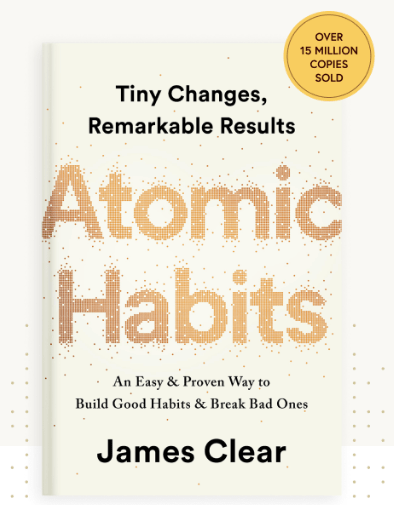
Book Review: Atomic Habits

Hi everyone, it’s been over a year since I last published a blog post, and for that I apologize. In that year, I’ve spent less time overall in front of a screen, and more time connecting with people and spending time outdoors. Recently I’ve missed this outlet to collect my thoughts so I’m rekindling this blog with a book review.

I just finished reading “Atomic Habits”, by James Clear and enjoyed it thoroughly. James’ strategy is very similar to mine, and he does a great job showing readers step-by-step how to create good habits that will help them live better lives. He has four laws to form a sustainable habit, and the book is an easy and engaging read that could easily be done in an afternoon. James throws in just enough stories and history to keep the material interesting and connect the strategies to the real world. I wished I had read his book twenty years ago as it would have made my journey easier; if for no other reason than to reinforce my own thoughts about the power of starting small.

The most powerful thing in the book for me is the “two-minute rule”. “When you start a new habit, it should take less than two minutes to do.” Here’s a few of my favorite lines. “A new habit should not feel like a challenge.” “The point is to master the habit of showing up.” The two-minute rule lines up perfectly with the methods I’ve used to improve myself so I know it works. I don’t want to spoil the book for you, but hopefully I’ve inspired you to read it for yourself. Use it to get 1% better today!

The Power of the Action Item List

Photo by Glenn Carstens-Peters on Unsplash

How many times have you had a seemingly simple goal or plan fail along the way because you lost sight of the little things that were critical to a successful outcome? It’s happened to me many times, and I’ve learned to use action item lists to combat these failures. It’s not for lack of good intention or work-ethic that we fail; we just overestimate our ability to focus and remember our plan in the days or weeks that follow the creation of it. We leave a meeting with clear direction believing it will be easy to remember everything we had to do, and then the inevitable happens…..our attention is drawn elsewhere, then we sleep, and before we know it, we’ve lost focus or plain can’t remember what our part even was!

Action lists are incredibly powerful tools, and are simple to create and use. One of the reasons they work is because we remember more if we write it down. The second reason is psychological; creating a plan that gives us clear direction to achieve the goal gives us the confidence to go GET IT DONE! It also makes the goal appear much less daunting and uncertain than it did before we took the time to formulate a plan of attack and write it down. As we make progress and check off action items, it gives us even more confidence and security that we’ll achieve the goal on time.

With New Years around the corner, many of us will be creating personal goals to achieve in the coming year. Do yourself a favor and take the time to create a plan to achieve those goals and write it down. Then post it where you’re constantly reminded of each step needed to accomplish the goal so you don’t lose focus as unforeseen distractions unfold throughout the year. A white board mounted somewhere you frequently look works well. If you’re prone to watching TV instead of walking after dinner, mount it above the TV for instance. This reminds you that your time is better spent on achieving your goals. I recommend making the first few steps simple and easy so you can get a little traction and confidence going before things get tough.

Final words: This is going to take some humility to admit that you can’t keep everything straight in your mind for you to effectively use action item lists. Wear your action item lists as a badge of honor; after all, the reason you need them is because you’re someone who GETS IT DONE, and people respect and count on you to perform! There’s no shame in using all the tools available to you, so drop the ego, and make those lists!

Fake It Until You Make It?

Photo by Maarten van den Heuvel on Unsplash

Faking until you make it is a well accepted and common practice in the workplace. This raises the question; if everyone knows about it, can’t we just be transparent about our skills and abilities? How much time and efficiency are we losing by pretending we know something we don’t, and then figuring it out on our own? What’s that doing to our mental health?

Faking it can lead to feelings of impostor syndrome, which Merriam-Webster defines as: a psychological condition that is characterized by persistent doubt concerning one’s abilities or accomplishments accompanied by the fear of being exposed as a fraud despite evidence of one’s ongoing success. These feelings can lead to anxiety and depression and can happen even if you aren’t faking it, but it’s much more likely among those who are faking it because they have real reasons to fear they’ll be exposed. It’s normal to have some feelings of self doubt when taking on a new challenge, but faking it adds to the stress of trying to overcome the challenge.

I suggest a different course. Be open and honest about your skills without downplaying them or selling yourself short. This leaves the door open to ask questions and get the help you need to learn that new skill faster, and people will respect you for your honesty and genuine confidence. If you feel a skill is critical to getting hired or advancing, do the work to learn it before applying. Commit yourself to continuous learning throughout your career so you’re ready to take on new challenges and opportunities as they present themselves. It’s not healthy to live with the stress of being fake and you’ll feel better without that weight around your neck, so start being honest today!

Look Ahead for Success

Thanks to Lucas parker for use of the image.
Thanks to Lucas Parker for the image.

Hi everyone, this one’s for all my fellow mountain bikers and leaders. I’m just getting back from a mountain biking trip to Arkansas where I arrived at the conclusion there’s some similarities in what it takes to be successful on the bike, and in professional and personal pursuits.

One of the hardest things to train yourself to do when mountain biking is to look 10-15 feet down the trail instead of what’s right in front of your tire, but it’s a critical skill if you want to succeed on the bike. This gives your brain time to understand what’s coming (rock, turn, root) and formulate a plan to successfully go over or around it. If you look down and focus on what’s directly in front of your tire, you end up making continuous adjustments and not being comfortable with any amount of speed. This makes for a jerky and awkward experience which limits the fun and can discourage people from riding more.

The same thing happens in business to leaders who get bogged down in the daily business and don’t look up and out at what’s coming in the future. This doesn’t give them time to properly prepare for the next challenge and ends up adding to the stressful cycle they’re caught up in, fighting whatever fire is raging that day. It’s just as difficult to train yourself to look farther ahead in business as it is on the bike, but it’s also every bit as important to achieving success and enjoying the experience. Just like your brain figures out and automatically adjusts your body to compensate for obstacles in the trail, your team will figure out the best way to run the daily business if you tell them what’s coming.

The second similarity is the effect that confidence and drive have both on the bike and in business. On the bike, if you believe you’re going to crash, then you’re absolutely going to crash because you’ll be so focused on not crashing that you won’t be doing the things you need to be to take the trail on. You won’t be aggressively pursuing excellence, instead you’ll be trying to avoid failure…. The same is true in business if you focus on avoiding failure, as you’ll end up in a declining state because you aren’t pursuing the things that lead to success in the current or future environment.

Our actions follow where our thoughts are so show up each day with a strong drive and focus on how to be successful, not how to avoid failure. Inspire confidence in the team by looking ahead for opportunities and obstacles so a plan can be set in motion to find success. Show up strong. Get out there. Take some risks, and have fun doing it!

Show Up Every Day Like It’s the First Day

Photo by Clark Tibbs on Unsplash

I was traveling this week, so although I don’t typically watch sports on TV, I did by accident at the hotel gym. The screen was split, showing a basketball coach on both sides coaching opposite teams in the same game. For one coach, it was his first game as head coach and the second coach had hundreds of games under his belt as head coach. Their actions and body language were strikingly different, which had me instantly thinking about how leaders change over time.

The first coach was pumped up, holding a stance like he was in the game himself, and shouting encouragement to his team! The second coach wasn’t speaking at all, in fact he looked kind of bored, and was just watching to see how the game was progressing. There was a stark contrast in the behavior of these two coaches, but I believe we can learn from both of them in this situation and become better leaders as a result.

The first coach was bringing a lot of passion and energy to his team, actively supporting them in making decisions. I think this is great and demonstrates the drive we have on our first day as new leaders to make a difference! Great leaders somehow keep this energy and optimism going throughout their careers and their teams benefit from it, but they also learn to trust their teams to carry out the strategy and vision without the leader constantly managing every detail. This is important and something the first coach will hopefully learn; bring the energy but let the team make decisions. Detach from the details so you can see the bigger picture and create a strategy that fits the environment.

The second coach was definitely detached, so much that the team wasn’t getting any feedback or encouragement from the sideline….. He had let hundreds of games wear him down, and somewhere along the way, lost how important it is to be excited about the things the team gets excited about. The effect of this behavior will be a lack of motivation and end with poor results. This coach needs to reset and remind himself before every game to be present in the moment and provide encouragement to the team to keep them motivated to win!

Each of these coaches were doing some things correctly and some things incorrectly as a result of their personalities and time as leaders. On Monday morning, remember this contrasting tale of two leaders and combine their strengths to encourage and motivate your team to win the game, while doing your job and seeing what it takes to win the championship. Your attitude sets the tone for the team so show up with the energy you brought to your first day as a leader!

Stress Test to Ease Your Mind

Photo by nikko macaspac on Unsplash

There’s nothing worse than wondering what unplanned issue is around the corner that’s going to impact your business or life, and for many, it can lead to anxiety and the feeling you’re not in control of the outcome. Given the current hiring situation mixed with supply chain interruptions, this is an all too common feeling among leaders trying to keep it all together. We’ve all come to expect the unexpected but few are preparing for it which sets them up for failure when the next calamity hits.

Rather than wait for the next interruption and then figure out how to react to it, I began performing stress tests on critical areas of the business to see how prepared we were and what steps we would take in each event. This has been incredibly powerful towards easing the anxiety associated with running a business dependent on international supply chains and it’s been a differentiating factor with customers who count on us to perform. I got the idea from the post-recession banking industry which was required to pass stress tests for liquidity in order to avoid needing a bailout in the event of another economic disaster. Given how unstable hiring and the supply chain have been recently, it’s been a lifesaver.

Running stress tests forces you to think about what could happen instead of worry about what might happen, which eases the mind and makes you feel more in control. Stress tests apply to your personal life as well. Looking to retire? Try living on the anticipated retirement budget for a few months to see if it’s feasible. Want to run a 5k in the middle of summer? You better get out of the air conditioned gym and try running outside to see how it feels. Be intentional about planning and preparing for the worst and put yourself back in control today.